What Is Integrative Health?
Bridging Modern Science with Traditional Wisdom
At Natura Sophia Wellness, we see health as the meeting point of traditional wisdom and modern science. Time-tested systems like Ayurveda meet today's insights from functional lab testing and systems biology. Integrative health isn't a new idea. It's a return to something people have long understood: body, mind and spirit are connected, and you feel your best when they're in balance.
From Traditional Systems to Modern Integration
Long before lab testing, practitioners of Ayurveda, Traditional Chinese Medicine and other early systems saw that everything in the body is connected. They noticed that digestion affects the mind, that emotions affect the body, and that imbalance in one area can ripple through the whole.
Modern research is exploring many of those same connections. We can now measure how stress shifts hormone levels, how the gut microbiome communicates with the brain, and how inflammation relates to energy and mood.
Our role is to bridge those worlds. We combine functional lab insight with traditional lifestyle wisdom to help you find balance in a personal, sustainable way.
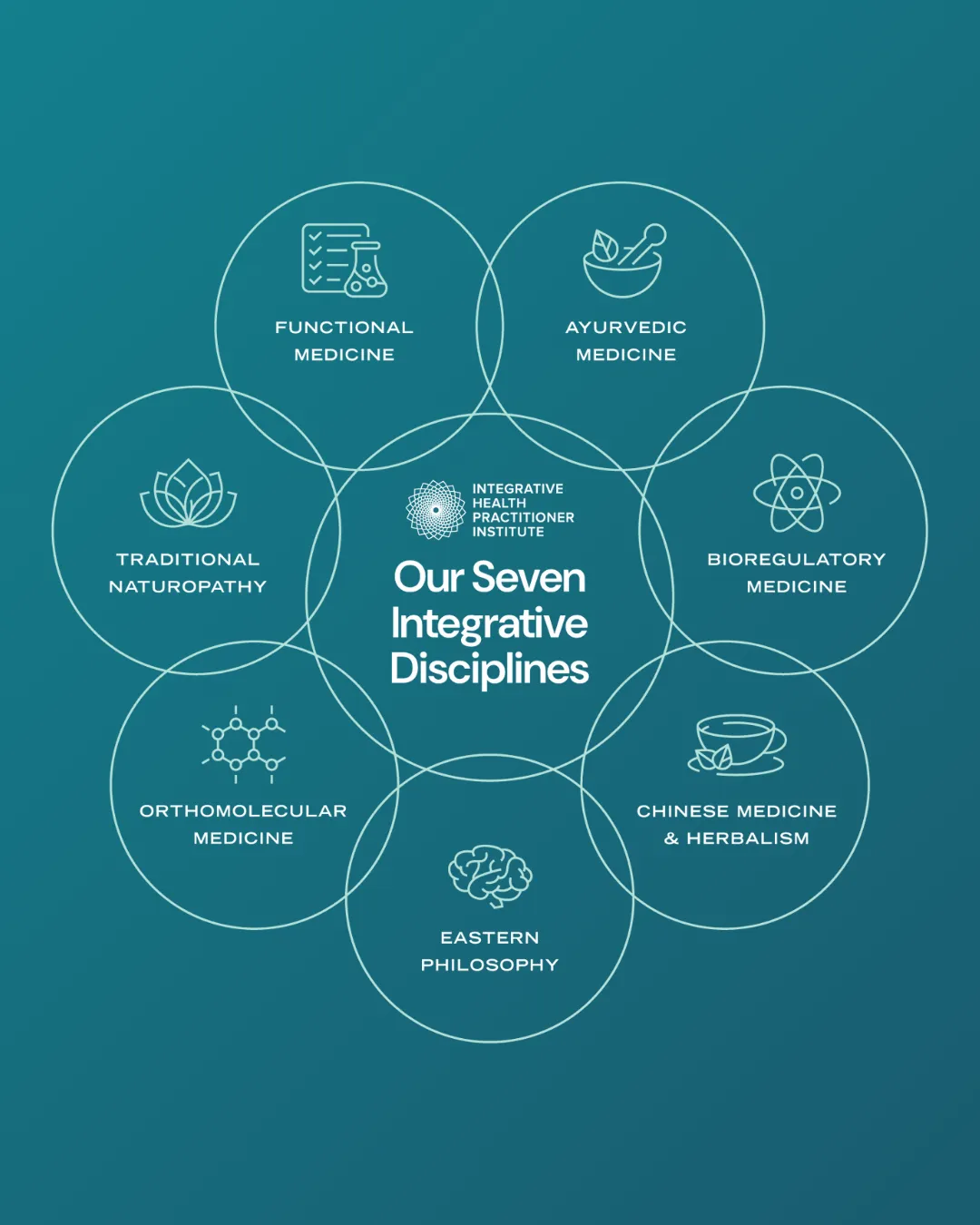
The Seven Integrative Disciplines
Our approach draws on seven disciplines from the Integrative Health Practitioner (IHP) framework. Each one adds a different lens:
1. Ayurveda
Ayurveda looks at each person's unique constitution (prakriti) and the three doshas: Vata, Pitta and Kapha. It uses food, herbs and daily rhythms to bring them into balance. Its philosophy anchors the rest of the framework.
2. Functional Medicine
Functional lab testing looks for patterns behind how you feel, from hormones and digestion to minerals and stress markers. At-home labs give us real data to work from instead of guesswork.
3. Nature-Based Living
This tradition centers on the basics: whole food, movement, water, sunlight and rest. Your environment and daily habits shape how you feel more than most people realize.
4. Orthomolecular Nutrition
Rooted in nutritional biochemistry, this discipline looks at vitamins, minerals, amino acids and essential fatty acids as the building blocks your cells rely on. It's where supplement science meets personalized nutrition.
5. Chinese Medicine and Herbalism
Like Ayurveda, Chinese Medicine is built on balance: yin and yang, the flow of qi, and harmony among the organ systems. Its herbal and energetic traditions add another layer of understanding.
6. Bioregulatory Medicine
This approach focuses on the body's ability to regulate itself. It pays attention to toxin exposure, drainage pathways like the lymph and liver, and how cells communicate.
7. Eastern Philosophy
Beyond technique, Eastern philosophy teaches presence and mindfulness. It reminds us that well-being is emotional and spiritual, not only physical. Breathwork, meditation and awareness practices support the inner side of change.
Each client's plan draws from several of these. Functional testing provides the data. Ayurveda and Chinese Medicine add constitutional insight. Nutrition and lifestyle build the foundation. Mindfulness keeps the process grounded.
Where Traditional Wisdom and Modern Research Meet
Traditional systems were built on careful observation of nature: rhythms, cycles and the body's responses to food, weather and emotion. Modern research is now studying many of the same patterns.
Agni and digestion. Ayurveda's concept of Agni, or digestive fire, describes how well you turn food into energy. Functional health explores similar questions through the gut microbiome, digestive enzymes and energy production in your cells. Sluggish digestion and fatigue are signals both traditions pay attention to.
Constitution and individuality. Ayurveda's idea of prakriti says each person is different. Research in epigenetics shows that diet, sleep, stress and environment influence how genes are expressed. Both point to the same idea: daily habits matter.
Daily rhythms. Research on the body's internal clock earned the 2017 Nobel Prize in Physiology or Medicine. It shows that cells follow a daily rhythm tied to light and dark. Ayurveda's dinacharya (daily routine) encouraged rising early, eating the main meal at midday and resting early, long before the science had a name.
Adaptogenic herbs. Herbs like Ashwagandha and Rhodiola have a long traditional history of use for stress and energy, and researchers are now studying them in clinical trials. Talk with your practitioner or doctor before starting any herb, especially if you take medications.
The mind-body connection. Research on meditation and mindfulness shows effects on stress and the nervous system. That matches what Ayurveda and Eastern philosophy have long taught: mind and body are not separate.
Integrative health is the meeting place of these insights. Traditional wisdom guides lifestyle choices. Modern tools like functional lab testing help personalize the plan.
A Personalized, Evolving Path
At Natura Sophia Wellness, no two programs are alike. Each path is guided by your history, lab results, constitution and daily rhythm. You get steady support and accountability along the way.
The goal is simple: help you feel balanced, energized and connected to your body's own wisdom.
This article is for education only and is not medical advice. C. Eric Overman, IHP2, is an integrative health practitioner, not a medical doctor. Always talk with your doctor about medical concerns and before changing any medication.
