Mastering the Art of Saying No
Mastering the Art of Saying No
Every day we face choices. Should we help a friend move? Can we take on an extra project at work? Often, we say yes because we want to be helpful. But constantly agreeing can drain our energy and affect our health.
Why Saying No Is Important
Learning to say no is a powerful skill. It can prevent us from overcommitting and help us focus on what truly matters. Here are some reasons why saying no can benefit you:
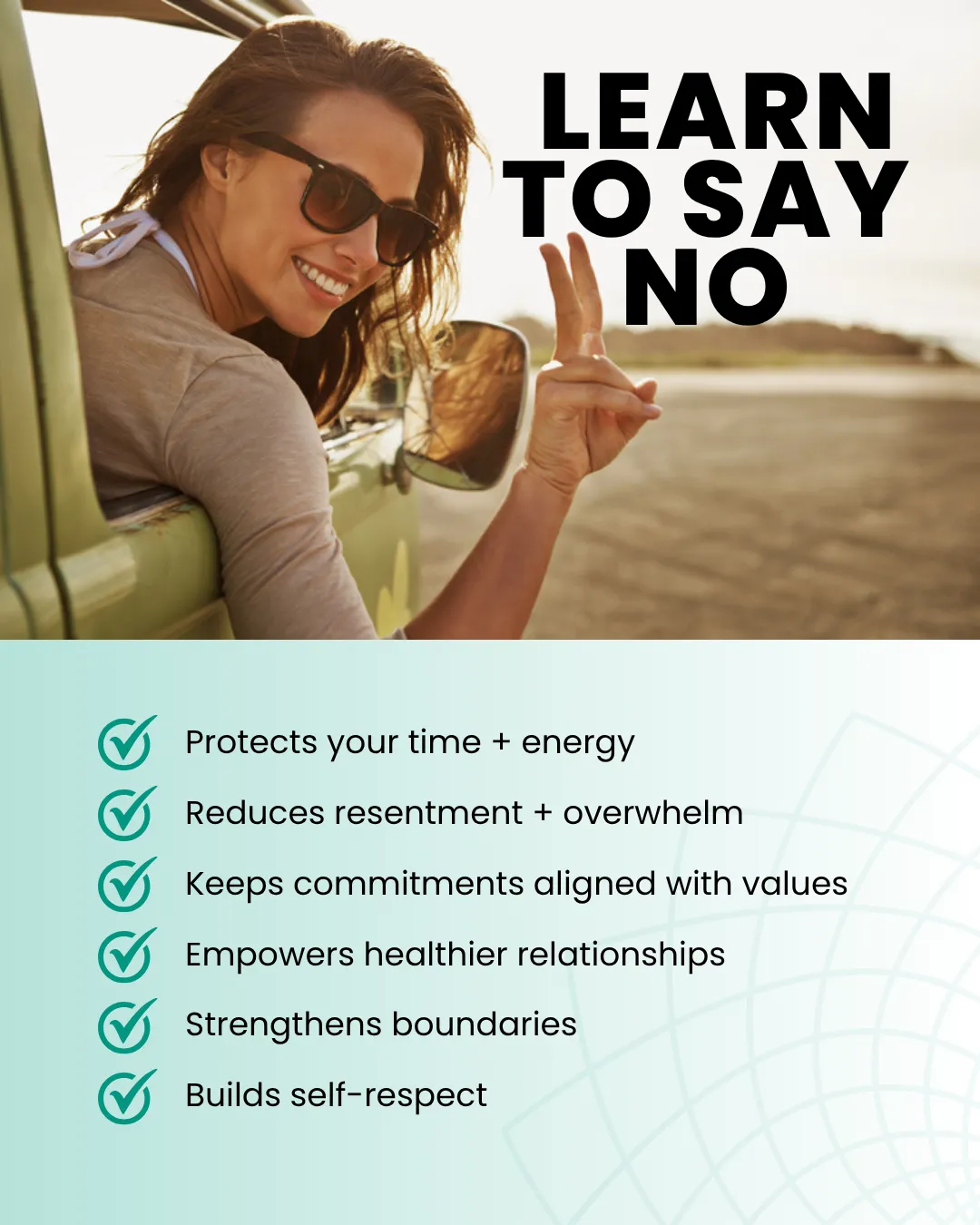
- Protects Your Time and Energy: By saying no, you guard your valuable time and energy, ensuring they are spent on your priorities.
- Reduces Resentment and Overwhelm: Continuously saying yes can lead to feelings of resentment and stress. Turning down unnecessary commitments can give you peace.
- Keeps Commitments Aligned with Values: Saying no helps ensure that any commitments you do make align with your personal values.
- Empowers Healthier Relationships: By setting boundaries, you foster respect in your relationships, making them healthier and more balanced.
- Strengthens Boundaries: Learning to say no helps you communicate your boundaries clearly, keeping your personal and professional life balanced.
- Builds Self-Respect: Standing up for yourself reinforces your self-worth, boosting your confidence and self-respect.
How to Say No Politely
It's not always easy to turn someone down, especially if you're not used to it. Here are some simple ways to say no politely:
- Be Honest: Simply and honestly explain why you cannot commit to something.
- Offer Alternatives: If possible, suggest another person or solution to help.
- Practice Saying No: Rehearse with a friend or in front of a mirror to build confidence.
- Use Gentle Words: Phrases like "I wish I could, but..." or "I can't at this time" make your refusal sound softer.
Tips for Practicing the Art of Saying No
Here are some practical tips to help you on your journey to master the art of saying no:
- Understand Your Priorities: Know what’s most important to you. This will make it easier to identify which requests to decline.
- Take Your Time: Don't feel pressured to respond immediately. Give yourself time to evaluate the request.
- Stay Firm: If someone continues to press you after you've said no, hold your ground. Remember why you declined in the first place.
- Reflect on Your Reactions: After saying no, reflect on how you feel. This can help evaluate if it was the right decision.
Benefits of Saying No
The benefits of mastering the art of saying no extend far beyond what you may initially realize. Improved mental health, better personal relationships, and more balanced professional commitments are all possible when you set clear boundaries.
Conclusion
Saying no isn’t always easy, but it is an essential skill to develop. By protecting your time, reducing stress, and fostering better relationships, you can create a healthier and more balanced life. Remember, every time you say no to something insignificant, you say yes to your well-being.
