The Power of Deep Breathing for Health
The Power of Deep Breathing: A Simple Practice for Better Health
In today’s fast-paced world, feeling stressed and overwhelmed can become part of everyday life. But what if there was a simple way to help manage stress and improve overall health anytime, anywhere? Deep breathing is a powerful tool that can bring immediate calm and long-term benefits to the body and mind. Let’s explore how deep breathing works and why incorporating this practice into your daily routine can be transformative.
Understanding Deep Breathing
Deep breathing, sometimes referred to as diaphragmatic breathing or belly breathing, involves taking slow, deep breaths that fill the lungs with air, engaging the diaphragm. This technique can be practiced by anyone, regardless of age or fitness level. The benefits of deep breathing are numerous and supported by science.
Key Benefits of Deep Breathing
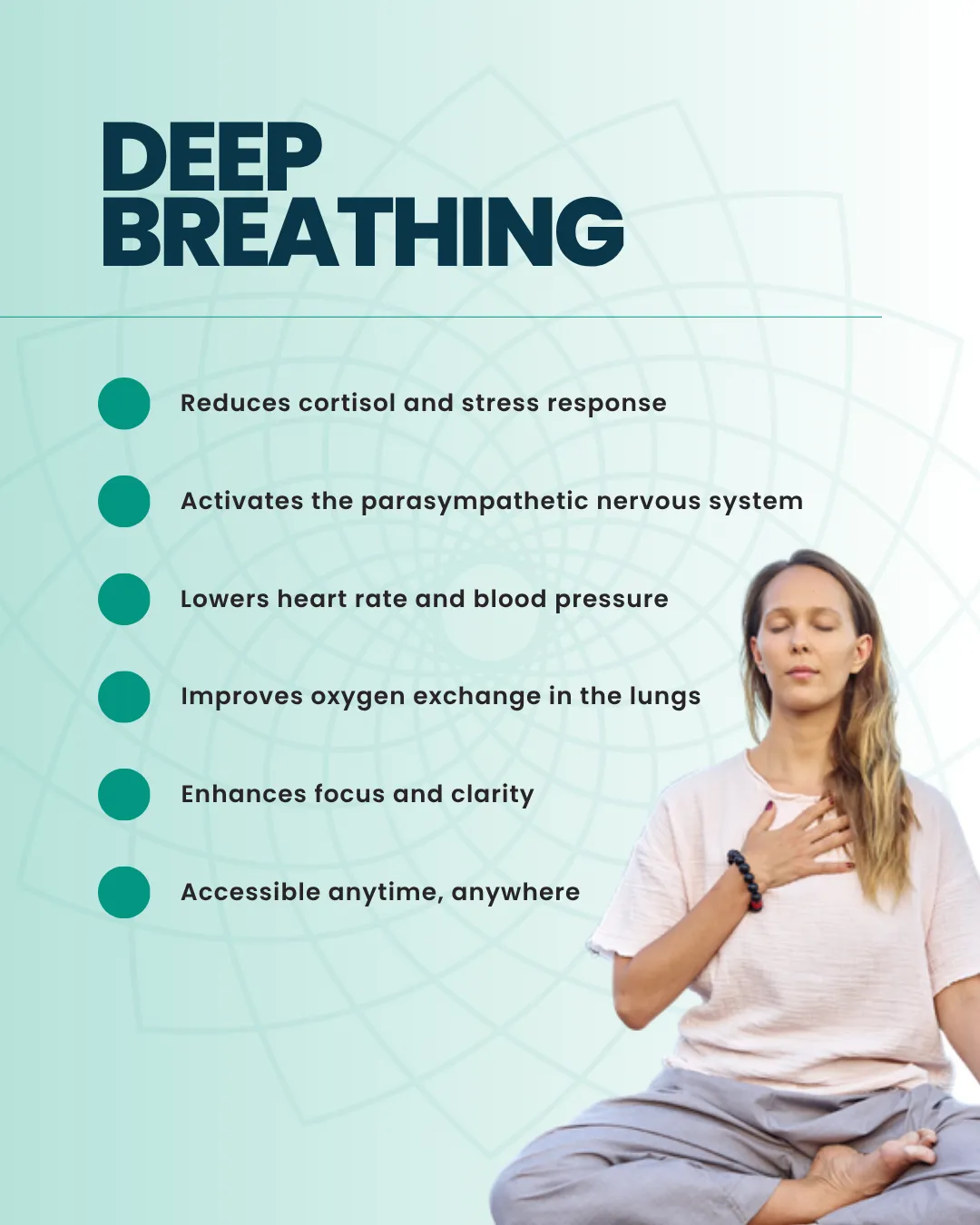
- Reduces Cortisol and Stress Response: One of the major benefits of deep breathing is stress relief. When practiced, it helps reduce cortisol levels—the hormone related to stress—thus calming the body and mind.
- Activates the Parasympathetic Nervous System: Deep breathing stimulates the body’s parasympathetic nervous system, which is responsible for the ‘rest and digest’ response. This activation promotes relaxation and recovery.
- Lowers Heart Rate and Blood Pressure: Regular practice can lead to a decrease in heart rate and blood pressure, which are crucial factors for cardiovascular health.
- Improves Oxygen Exchange in the Lungs: With deep, intentional breaths, there is an increase in oxygen exchange, providing your body and brain with the rich oxygen they need to function optimally.
- Enhances Focus and Clarity: By reducing stress and enhancing oxygen flow to the brain, deep breathing can improve mental clarity, focus, and cognitive function.
- Accessible Anytime, Anywhere: Perhaps one of the best aspects of deep breathing is its accessibility. You can practice it anywhere—whether at home, work, or even in a crowded place—offering immediate relief.
Steps to Practice Deep Breathing
Ready to start your deep breathing journey? Here’s a simple guide to help you begin:
- Find a Comfortable Position: Sit or lie down in a comfortable position. Ensure your back is straight to allow for full lung expansion.
- Place Your Hands: Place one hand on your chest and the other on your abdomen. This helps in feeling the movement as you breathe.
- Inhale Deeply: Breathe in slowly through your nose. As you inhale, let your breath fill your abdomen. You should see your abdomen rise more than your chest.
- Hold for a Moment: Pause for a moment before exhaling. This can be for 2-3 seconds, allowing time for the oxygen to circulate.
- Exhale Slowly: Exhale slowly through your mouth, feeling the hand on your abdomen lower. Push out as much air as possible.
- Repeat: Repeat this process for 5-10 minutes, focusing on each breath.
Incorporating Deep Breathing into Daily Life
Making deep breathing a regular part of your routine is easy and rewarding. Try it:
- In the Morning: Start your day with a calming deep-breathing session to set a positive tone.
- During Breaks: Take short breaks to practice deep breathing, especially during busy or stressful days.
- Before Bed: End your day with a breathing routine to prepare your body and mind for rest.
Deep breathing is more than just a quick way to feel better. It’s a lifelong tool that can enhance physical and mental health. By integrating it into daily life, you can unlock numerous benefits and achieve a greater sense of well-being. Remember, the path to a healthier life can start with a single breath.
